
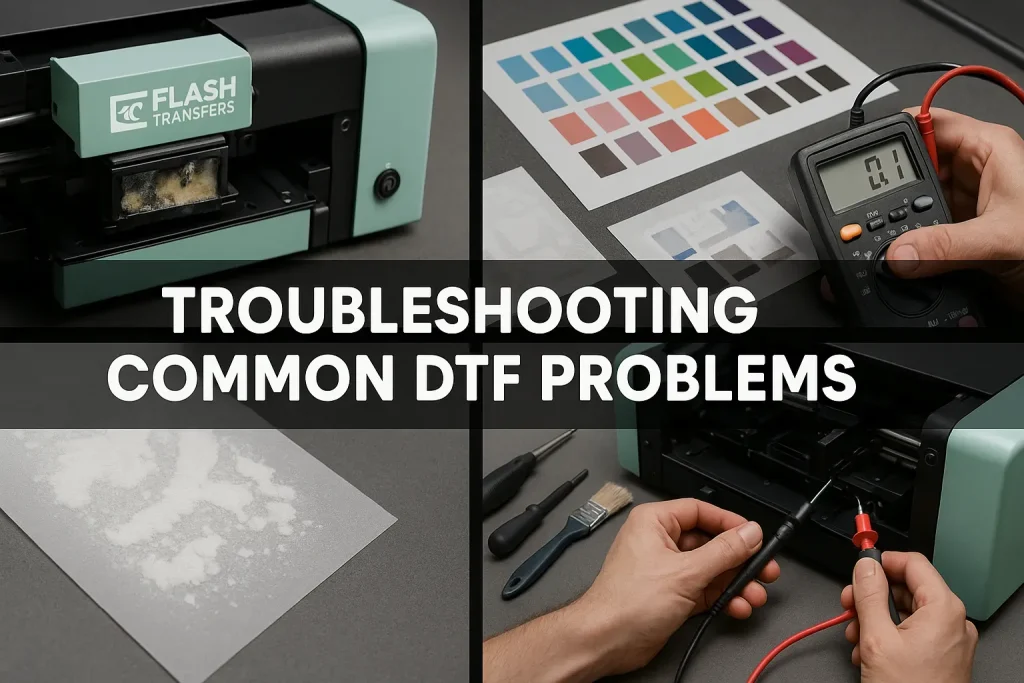
DTF troubleshooting is essential for anyone working with Direct-to-Film transfers, helping you diagnose issues before they ruin a project. This guide walks you through practical checks that identify symptoms early and minimize waste. From DTF cracking fix to DTF peeling solution, and a look at DTF transfer issues, how to prevent cracking in DTF transfers, and DTF printing troubleshooting, you gain concrete, actionable steps. A systematic approach to ink density, curing, and pressing conditions helps you locate the root cause rather than guessing. By following these steps, you can save time, reduce reprints, and deliver durable transfers that look as good as the artwork.
In other terms, the challenges of the direct-to-film workflow can be described as film adhesion, substrate compatibility, and print rigidity. Think of it as a multi-stage process from design to heat application, where each stage influences durability and wash-fastness. Latent Semantic Indexing (LSI) principles guide the discussion by using related concepts such as substrate prep, adhesive cure, print density control, transfer film quality, and post-press handling. Framing the topic with these alternative terms helps readers and search engines connect questions about coating compatibility and transfer reliability with practical troubleshooting steps.
1. DTF Transfer Issues: Cracking vs Peeling — Recognizing Symptoms
DTF transfer issues often reveal themselves as cracking or peeling, the two most visible defects in many prints. Cracking appears as fine lines or fractures in the ink layer, while peeling is the transfer detaching from the garment surface, typically after washing or abrasion. Recognizing which symptom you’re dealing with is the first step in effective DTF troubleshooting and guides you toward the correct remedy.
By understanding how cracking and peeling manifest, you can start diagnosing root causes more quickly. Consider how ink density, adhesive powder curing, and pressing conditions interact with fabric type to influence outcomes. This awareness sets the stage for applying targeted fixes and improves your ability to handle DTF transfer issues with confidence.
2. Root Causes Behind Cracking and Peeling in DTF Transfers
Cracking is often tied to stress in the ink layer or a mismatch between the ink film and the substrate. Common culprits include ink over-saturation, excessively cured adhesive powder, or too much fabric stretch during pressing. When the print becomes too rigid or exposed to high temperatures, cracking can occur even on simple designs.
Peeling usually stems from insufficient adhesion between the powder-coated transfer and the fabric, inadequate curing, or improper pressing parameters. If the adhesive powder isn’t fully cured or the garment is washed too soon or aggressively, the transfer may peel away. In some cases, using low-quality transfer film or an unsuitable substrate reduces bond strength, contributing to peeling.
3. A Systematic DTF Troubleshooting Plan: A Step-by-Step Guide
A repeatable DTF troubleshooting plan helps isolate variables and confirm which changes deliver the best results. Start with careful inspection of materials and setup, then move through ink density testing, curing checks, and press parameter adjustments. This systematic approach is central to mastering DTF transfer issues and streamlining workflows.
This plan aligns with fundamentals of DTF printing troubleshooting: verify film and powders, calibrate the printer and RIP settings, run controlled test prints, and validate that the transfer adheres properly under real-world use. Following a structured process reduces waste and accelerates your path from problem spotting to reliable, repeatable results.
4. Practical Fixes for Cracking: From Cracking to Confidence
A practical starting point is tweaking ink density and color balance to reduce film brittleness without sacrificing vibrancy. A slightly lighter print can significantly improve flexibility on knit fabrics and blends, helping prevent stress that leads to cracking. This aligns with a common DTF cracking fix approach: balance ink load to maintain film integrity.
Another key lever is calibrating the adhesive powder curing process. Following manufacturer guidelines and conducting controlled test batches ensures a consistent cure, which supports stronger adhesion and reduces cracking risk. Pair this with optimized heat press settings tailored to each fabric type to build a reliable trajectory away from cracking and toward durable transfers.
5. Materials and Processing Parameters: Optimizing for Longevity
Material quality matters as much as technique. Choose high-quality transfer film and adhesive powders, and ensure proper pretreatment and garment consistency for reproducible results. Subpar materials often fail to establish a strong bond, contributing to both cracking and peeling and complicating DTF transfer issues.
Press parameters must be tuned to fabric type, with careful attention to temperature, time, and pressure. Lighter fabrics may require lower heat and shorter dwell, while heavier fabrics need more dwell. Consistent, even pressure and the use of a release layer can prevent scorching and transfer-induced cracking, while supporting long-term longevity of the print.
6. Quality Control, Documentation, and When to Seek Expert Help
Standardizing your workflow is essential for consistent results. Create documented procedures for printing, powdering, curing, and pressing so every operator follows the same steps. Regular quality checks using a control garment help verify that a batch meets defined standards before moving into production.
If persistent cracking or peeling remains after thorough troubleshooting, consider seeking expert advice or upgrading equipment. A professional evaluation can identify subtle process drift, material incompatibilities, or calibration issues that are difficult to detect in-house. Embracing DTF printing troubleshooting with guided recommendations can yield noticeable gains in reliability and durability.
Frequently Asked Questions
DTF cracking fix: What is the most effective DTF troubleshooting plan to address cracking?
Start with a repeatable troubleshooting workflow: inspect materials and setup, verify printer calibration and RIP settings, and run a simple test print to evaluate ink density. If the print looks oversaturated, reduce density to prevent brittle ink films. Ensure the adhesive powder is cured evenly at the recommended temperature and time. Tune heat-press parameters for the fabric (temperature, time, and pressure) to avoid stressing the print, and allow the transfer to cool gradually after pressing. Proper post-press handling and care instructions help minimize cracking over time.
DTF peeling solution: How can you prevent peeling and what does a practical DTF peeling solution look like?
A practical DTF peeling solution focuses on bond strength between film, powder, and fabric. Ensure the adhesive powder is fully cured and compatible with the transfer film and the garment, and optimize the transfer temperature, time, and pressure for the substrate. Use a consistent curing process to avoid under- or over-curing that weakens adhesion, and verify that the print remains bonded during washing or abrasion by following fabric-specific care guidelines.
DTF transfer issues: What are common DTF transfer issues beyond cracking and peeling, and how can you troubleshoot them?
Common DTF transfer issues include misregistration, uneven ink density, powder residue, and improper curing. Check alignment during printing to prevent misregistration, calibrate RIP settings to avoid over- or under-saturation, and ensure the adhesive powder cures uniformly. Confirm fabric compatibility and use quality transfer film and powders to improve bond strength. Run test prints and adjust settings before large production runs to prevent recurring defects.
How to prevent cracking in DTF transfers: What practical steps help prevent cracking in DTF transfers?
To prevent cracking, reduce ink density to improve film flexibility without sacrificing vibrancy, and avoid over-curing the adhesive powder. Use press settings tuned to the fabric type, with even pressure and minimal fabric stretch during pressing. Allow transfers to cool gradually and verify substrate compatibility with the transfer system. Conduct small-scale tests on representative fabrics before full production.
DTF printing troubleshooting: What is a repeatable workflow for DTF printing troubleshooting to improve durability and consistency?
Adopt a six-step workflow: 1) Inspect materials and setup; 2) Run a test print and analyze ink density; 3) Calibrate powder curing per supplier guidelines; 4) Optimize temperature, time, and pressure for each fabric; 5) Practice consistent post-press handling and cooling; 6) Provide clear care instructions to customers to maintain bond integrity and longevity.
DTF troubleshooting: When should you seek expert help or upgrade equipment in DTF troubleshooting scenarios?
If cracking or peeling persists after following the standard troubleshooting workflow, seek expert help or consider upgrading equipment. Upgrades may include higher-quality transfer film, adhesive powders, or a more precise heat press. A professional evaluation can identify subtle process drift, material incompatibilities, or calibration issues that are difficult to spot in-house.
| Theme | What It Means | Common Causes | Practical Fixes / Actions | Expected Outcome |
|---|---|---|---|---|
| Cracking |
|
|
|
|
| Peeling |
|
|
|
|
| Systematic Troubleshooting Plan (Overview) |
|
|
|
|
Summary
Conclusion: DTF troubleshooting is a practical, systematic approach to diagnosing and fixing defects in direct-to-film transfers. By focusing on the interaction between ink density, adhesive curing, and precise heat-press parameters, you can reduce cracking and prevent peeling, delivering durable, vibrant transfers that stand up to washing and wear. Start with a systematic plan, test thoroughly, and document your findings. With patience and consistency, you’ll move from trial-and-error to repeatable, high-quality results that meet customer expectations and elevate your DTF printing workflow.