
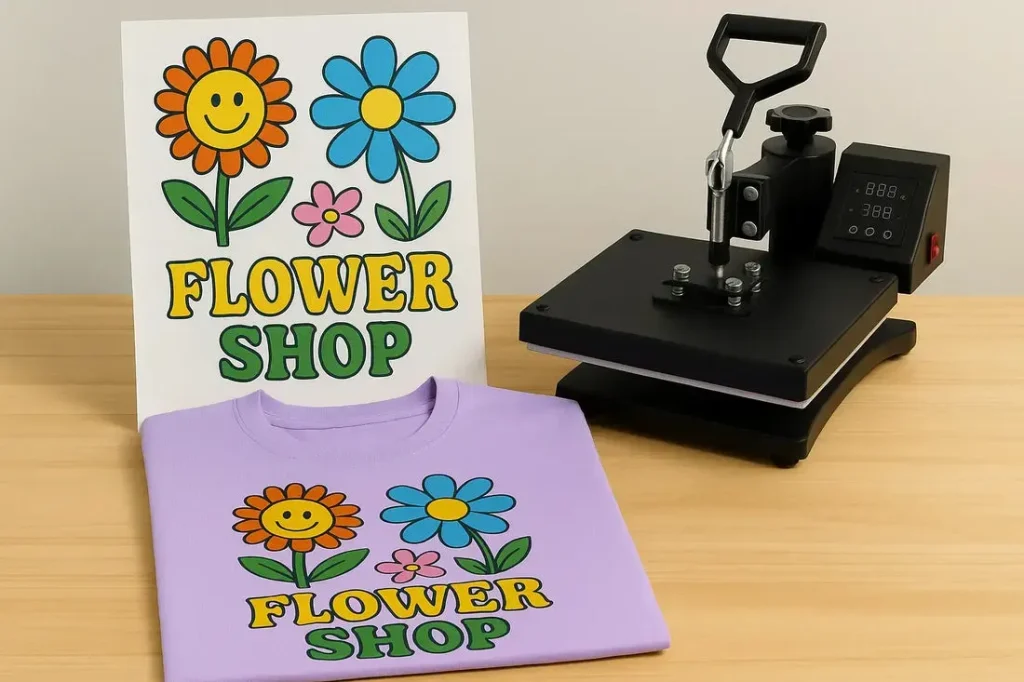
DTF printing for small brands has emerged as a practical, scalable way for indie labels to turn creative ideas into high-quality products with lower upfront costs and shorter lead times, making it easier to launch limited runs without sacrificing brand standards and sustainable production practices that minimize waste for small teams and solo founders navigating cash flow. For on-demand printing, this film-based transfer workflow offers rapid proofs, vibrant color, a soft hand feel, and reliable washing durability, which helps teams iterate designs quickly between drops and collect real customer feedback, enabling teams to refine artwork and production specs early, reducing surprises at scale, and align with marketing calendars. Compared with traditional methods, it supports cost-effective production and flexible batch sizing, enabling startups to test new collections, scale production in response to demand, minimize excess inventory, and maintain lean brand pipelines in scattered markets, enabling smarter allocation of resources. To help brands decide between methods, many discuss DTF transfer options and weigh DTF printing vs screen printing to understand value, performance, and suitability for diverse fabrics and logo details across regions and substrates. A straightforward DTF printer setup in a lean workspace—paired with clear SOPs and a simple curing routine—enables quick turnaround from file to finished garment, preserving brand identity at scale while also supporting sustainable workflows and long-term growth for future partnerships with retailers and distributors.
In other words, the same concept is often described as a direct-to-film or film-based transfer, where vibrant artwork is printed onto a carrier and then bonded to fabric with heat. This alternative framing helps teams think in terms of textiles, color accuracy, and workflow efficiency rather than the traditional press-and-screen mindset. Latent Semantic Indexing (LSI) principles guide content creators to pair terms such as digital garment printing, color-rich transfers, quick-turnaround manufacturing, and fabric compatibility to capture related searches without keyword stuffing. By describing the method with varied vocabulary, brands can align content for both expert readers and newer audiences seeking flexible, scalable production options.
DTF printing for small brands: scalable, cost-effective growth through on-demand printing
DTF printing for small brands offers a scalable route to bring creative ideas to market with limited upfront investment. With a modest DTF printer setup, brands can start small and expand as demand grows, leveraging on-demand printing to fulfill orders without maintaining bulky inventories and minimizing idle capacity.
This approach delivers high color fidelity and a soft hand feel across a range of fabrics, while enabling rapid experimentation with new designs. By aligning print runs with actual demand, small brands can protect margins and preserve brand integrity as growth accelerates.
DTF printing vs screen printing: choosing the right method for small runs
When deciding between DTF printing vs screen printing, small brands weigh setup costs, minimums, and design complexity. DTF printer setup is often lighter, with lower upfront tooling and faster proofing, making it well-suited for evolving catalogs and frequent design iterations.
For full-color images, photos, and complex gradients, DTF offers on-demand printing advantages that preserve fidelity and reduce waste. In scenarios with irregular or limited runs, DTF tends to deliver lower per-unit costs and faster time-to-market compared with traditional screen printing.
DTF transfer quality: delivering crisp lines, gradients, and durable results
The DTF transfer process enables crisp lines, smooth gradients, and vibrant color on a wide array of fabrics. Realizing this quality relies on a well-controlled workflow—from artwork preparation and accurate color management to consistent film curing and precise heat-press parameters.
Durability is central to customer satisfaction. When properly cured and heat-pressed, DTF transfers resist fading and peeling across multiple washes, helping small brands maintain a premium perception and encourage repeat purchases.
On-demand printing and inventory control with DTF: reducing stock risk for small brands
On-demand printing aligns production with real demand, allowing limited-edition drops and evergreen basics to be released without building large inventories. This approach minimizes capital tied up in stock and reduces the risk of unsold merchandise.
The cost benefits stem from avoiding high minimums, tooling, and screening fees. For small brands, this translates into cost-effective production per unit and greater flexibility to adapt assortments in response to market feedback.
DTF printer setup and workflow optimization for small teams
A practical DTF setup for a small team typically includes a dedicated DTF printer, heat press, films, powders, and a simple curing station. Effective color management begins with calibrated displays, standardized file preparation, and consistent print resolutions to ensure predictable transfers.
Workflow optimization focuses on queue management, batch planning, and quality assurance checks to minimize reprints and downtime. Regular maintenance, film storage discipline, and routine printer head care help sustain stable output and reliable DTF transfers over time.
Costs, ROI, and scaling strategies with DTF for small brands
Initial investment encompasses the printer, heater, films, and powders, with ROI driven by lower minimum runs, faster go-to-market, and reduced setup waste. Ongoing costs include ink, powder, films, and energy, but efficient production planning can yield favorable per-unit economics in higher weekly volumes.
To scale successfully, leverage supplier negotiations, gradually broaden the design catalog, and implement strict quality controls to protect margins. By combining on-demand printing with disciplined workflow and proactive maintenance, small brands can grow output while sustaining color fidelity and brand consistency.
Frequently Asked Questions
What is DTF printing for small brands and how does it compare to DTF printing vs screen printing?
DTF printing for small brands is a film-based transfer method that lets you print designs on a special film and transfer them to garments with heat. Compared with traditional screen printing, it requires much lower setup costs and is ideal for small runs, on-demand testing, and full-color artwork. It offers fast proofing and strong color fidelity, but for very high-volume production screen printing can be more cost-efficient per unit.
How does a DTF transfer work for small brands?
A typical DTF transfer workflow for small brands includes preparing artwork, printing on a DTF film, applying adhesive powder, curing the film, and then transferring the image to fabric with a heat press. When properly cured, pressed, and aligned, the transfers deliver crisp lines, smooth gradients, and durable results across washes.
Why is DTF printing for small brands a good fit for on-demand printing and rapid design testing?
DTF printing for small brands enables on-demand printing, allowing you to fulfill orders as they come and test new designs quickly without holding large inventories. It supports rapid iterations, customization at scale, and consistent quality that helps protect brand integrity.
Is DTF printing cost-effective production for small brands?
Yes, for many small brands DTF printing offers cost-effective production due to low upfront costs, reduced minimums, and efficient runs for small batches. Per-unit costs improve as volumes grow, but the overall ROI benefits come from faster time-to-market, less waste, and simpler workflows.
What should you consider in a DTF printer setup for small brands?
Key DTF printer setup considerations include selecting a compatible DTF printer and heat press, choosing reliable film, inks, and adhesive powders, and implementing solid color management and prepress workflows. Also plan for maintenance, space, ventilation, and a straightforward QC process to ensure consistent results.
What practical tips help ensure reliable DTF transfers for small brands?
Tip include calibrating color profiles and doing test prints with each new design, maintaining the printer and heat press, ensuring uniform powder adhesion, optimizing curing times, using fabrics suited to DTF, and implementing a simple QA checklist before shipping.
| Topic | Key Points |
|---|---|
| What is DTF printing and why it matters for small brands |
|
| How DTF printing works in practice |
|
| Why small brands choose DTF over other methods |
|
| Brand A case-study snapshot |
|
| Tips for implementing DTF printing for small brands |
|
| Cost considerations and ROI |
|
| Quality, durability, and customer perception |
|
| Common challenges and practical solutions |
|
| Scaling considerations for growing brands |
|
| Industry trends and the future of DTF in small-brand wardrobes |
|
Summary
DTF printing for small brands offers a compelling, descriptive pathway to scale design-led products with fewer barriers to entry. By embracing a workflow that emphasizes proper prepress, material selection, and efficient production, small brands can achieve rapid growth while preserving print quality and brand integrity. The included case-study insights demonstrate how focused design guidelines, process optimization, and cost discipline translate into tangible ROI and resilient margins. As the technology evolves, DTF printing for small brands is likely to deliver even greater fabric compatibility, durability, and color fidelity, reinforcing its role as a scalable cornerstone for modern, design-driven brands.