
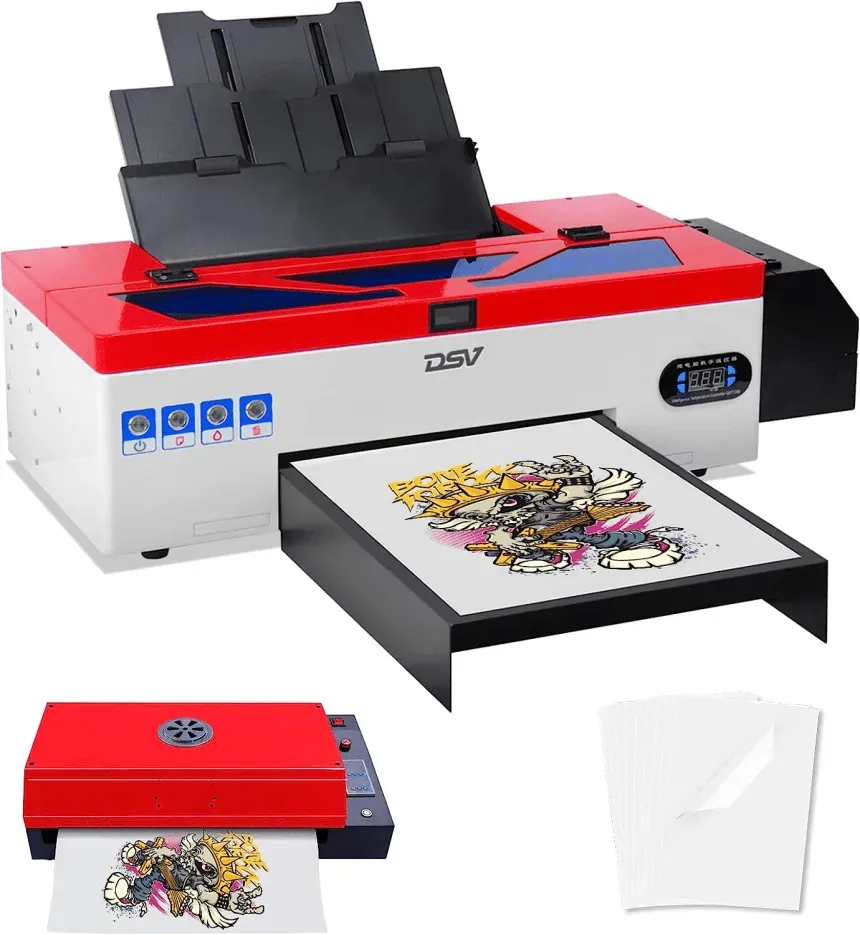
DTF printer for small business is redefining how new brands enter the market by enabling vibrant, durable transfers on a diverse range of fabrics, from cotton tees to blends and even synthetic textiles, while keeping production approachable for teams with limited overhead and tight deadlines, and it supports a flexible mix of short runs and test batches to refine designs before a full rollout. A direct-to-film printer has emerged as a flexible core in many small businesses, simplifying prepress workflows, reducing setup times, allowing you to experiment with product variants without committing to large minimum runs, enabling rapid prototyping and personalized offers that boost perceived value and customer engagement across seasonal lines. Understanding DTF printing cost is essential for budgeting, helping you forecast per-unit expenses, evaluate ink consumption, powder and film longevity, and price your offers competitively while protecting margins as demand grows, especially when negotiating with suppliers for bulk ink and ongoing consumables to improve cash flow. When comparing models, focus on DTF printer features such as color accuracy, white ink reliability on darker fabrics, transfer film compatibility, head life and maintenance cycles, as these details directly impact uptime and long-term costs, while vendor support and spares availability can reduce downtime during early learning. Choosing the right setup means balancing upfront investment, ongoing consumables, and a scalable workflow that delivers consistent color, sharp detail, and dependable quality across a growing line of products, ensuring customer satisfaction and repeat business while guiding you toward a healthy return on investment over the first year.
Viewed through the lens of search intent, the same idea is often called film-transfer printing or direct ink transfer to textiles, underscoring its compatibility with a wide fabric mix and a straightforward workflow. Other common phrases you’ll encounter include DTF-based printing, white-ink stability, and heat-press friendly processes that help small brands scale without prohibitive setup costs. When evaluating options from an SEO perspective, look for content that covers startup costs, ongoing consumable expenses, maintenance needs, and color reliability—terms you will see framed as DTF printing cost, ink chemistry, and media compatibility. In practice, you’ll want to map out a workflow that integrates design, color management, curing, and quality control so the content explains both the technical and commercial benefits.
DTF printer for small business: Key factors for top-quality transfers
Choosing a DTF printer for small business starts with print quality. Look for machines that deliver high DPI, strong white ink performance on dark fabrics, and reliable color management across a variety of textiles. A model with consistent calibration, good color separations, and stable ink flow helps ensure your designs reproduce faithfully from proof to product. For growing brands, this balance between fidelity and practicality is more valuable than sheer speed alone.
Beyond image quality, evaluate how the printer handles your typical fabrics, from cottons to blends. Consider the availability of compatible RIP software and color profiles, as these tools translate your artwork into predictable results. In practice, you’ll want a system that supports efficient batch processing, easy prepress adjustments, and repeatable results across multiple print runs.
Direct-to-film printer essentials: inks, films, powders, and heat-press setup
At the core of a direct-to-film printer setup are the consumables: inks, transfer films, and adhesive powders. The right combination yields bright colors, good color fidelity, and strong wash durability. Ensure compatibility between your ink chemistry, the chosen film, and the powder adhesive so transfers remain crisp even after multiple washes.
A well-planned heat-press workflow completes the circle. Accurate temperature, time, and pressure settings are essential to activate the powder adhesive and finalize the transfer. Regular maintenance of the printing head and routine cleaning help prevent color shifts and misregistration, keeping production steady as you scale.
DTF printing cost and total cost of ownership: budgeting for growth
DTF printing cost goes beyond the sticker price of the machine. For small businesses, ongoing expenses include inks, powders, films, maintenance, and potential consumable waste. A holistic view of total cost of ownership helps you compare models not just by upfront price but by long-term value and reliability.
To optimize costs, calculate per-print expenses for your typical fabrics and designs. Look for printers that minimize ink and material waste, offer bulk supply options, and have readily available spare parts. A clearer picture of maintenance needs and downtime impact will help you forecast profitability as demand grows.
Workflow optimization for a growing operation: choosing the best DTF printer for small business
A scalable workflow starts with planning from prepress to finished product. Establish design standards, color-management practices, and a reliable RIP setup that can handle batch processing and fabric-specific profiles. For many teams, selecting the best DTF printer for small business means prioritizing throughput without sacrificing print quality.
As orders accumulate, consider future-proofing with expandability options, such as wider media support or higher throughput. Standardized processes, robust supplier relationships, and clear maintenance schedules help maintain consistency and reduce downtime, enabling your business to grow without repeated equipment swaps.
DTF printer features to compare: reliability, throughput, and support
Key DTF printer features to compare include print width, color stability, white-ink performance, and the robustness of the media handling system. A dependable feed mechanism and reliable printheads minimize misprints and waste, which is particularly important for small teams with tight deadlines.
Support structures—warranty terms, spare parts availability, and access to remote diagnostics—can dramatically affect uptime. Evaluate vendor training, online resources, and active user communities to learn tips, troubleshoot issues, and optimize color profiles for your common fabrics and designs.
Sourcing support and community resources to protect your DTF investment
Protecting your investment means ensuring solid vendor support, clear service agreements, and ongoing training. Review warranty coverage for critical components like printheads and ink systems, and ask about service response times and on-site options. A service plan can help you avoid costly downtime during peak production.
Community resources, forums, and official user groups can be invaluable for practical troubleshooting and optimization ideas. Engage with peers who print similar fabrics or run similar volumes to share sample results, best practices, and supplier recommendations, ensuring you stay informed about the latest DTF printer features and consumable developments.
Frequently Asked Questions
What is a DTF printer for small business and what are its key benefits?
A DTF printer for small business is a direct-to-film printer designed for small teams to create durable fabric transfers. It uses white and color inks on PET film, enabling vibrant designs across many fabrics, with lower upfront equipment costs and scalable production compared to some alternatives.
What are the advantages of using a direct-to-film printer for a DTF printer for small business?
Benefits include lower per‑print costs, broad fabric compatibility (light to dark), simpler workflow, and faster turnaround for small batches. Keep in mind ink and film availability and total cost of ownership.
What is the best DTF printer for small business and what DTF printer features matter most?
The best DTF printer for small business balances print quality, reliability, and cost. Look for high DPI, strong white ink performance, suitable print width, easy maintenance, robust RIP software, and accessible spare parts.
What does DTF printing cost look like for small batches?
DTF printing cost includes inks, transfer film, powder adhesive, and routine maintenance, plus energy use. Per‑print cost depends on fabrics, color coverage, and consumable prices, so compare models with a clear cost-per‑print metric.
What are essential DTF printer features for a growing small business?
Key features include reliable printheads, efficient ink usage, compatible RIP software, straightforward maintenance, easy media loading, and solid warranty and support. These enable consistent color quality and scalability.
How should I estimate total cost of ownership when selecting a DTF printer for small business, including DTF printing cost?
Assess upfront price, consumables (inks, film, powder), maintenance, parts, and service plans. Calculate per‑print costs across typical fabrics and anticipated volume to evaluate total cost of ownership for a DTF printer for small business.
| Topic | Key Points |
|---|---|
| DTF printing overview and relevance | – Transfers designs from PET film to fabric via heat press. – Benefits for small businesses: lower startup costs, strong color reproduction on a wide range of fabrics, and a straightforward workflow that scales with demand. |
| Core components | – Printer; – White and color inks; – Transfer film; – Powder adhesive; – Heat press. – Process: The printer deposits ink onto PET film, then powder adhesive, cures, and transfers to fabric. |
| Top factors when choosing a DTF printer for small business | – Print quality and resolution (DPI, white ink performance, color management). – Print width and media handling. – Ink, film, and powder compatibility. – Reliability, maintenance, and parts availability. – Total cost of ownership (TCO). – Ease of use and workflow integration. – Support, warranty, and community resources. |
| Cost of ownership | – Upfront purchase price and initial consumables. – Consumables cost per transfer (inks, films, powders). – Maintenance and parts. – Downtime impact on fulfillment. – Energy usage and waste management. |
| Workflow considerations | – Design and prepress with color management. – RIP setup and color profiles. – Printing strategy (one-pass vs two-pass). – Post-processing and curing. – Quality control. – Inventory and production planning. |
| Practical buying tips | – Request samples on your fabrics. – Compare cost per print across fabrics. – Check maintenance expectations and parts availability. – Assess expansion options for wider media or higher throughput. – Review warranty and service plans. – Seek community feedback. |
| Common questions | – DTF vs DTG: suitability depends on product mix and durability. – Turnaround times vary by design and batch size. – Regular nozzle cleaning and head maintenance are essential. – For growing demand, plan for scalable workflows and multiple units. |
| Maintenance & support | – Regular maintenance of printheads and nozzles. – Availability of spare parts and reliable vendor support. – On-site or remote diagnostics can reduce downtime. |
Summary
DTF printer for small business is a strategic choice for turning designs into durable, high-quality transfers across a variety of fabrics. To pick the right model, consider print quality, media compatibility, maintenance requirements, and total cost of ownership. A well-chosen DTF setup supports scalable production, efficient workflows, and reliable color fidelity, helping your brand differentiate itself in a competitive market. Focus on a robust print engine, compatible consumables, accessible parts and support, and a workflow that matches your product line and batch sizes. In short, the right DTF printer for small business, combined with a solid workflow and vendor support, enables consistent, vibrant transfers for every order.